 Image 1 of 1
Blue Footed Boobies in Galapagos
Blue-footed boobies in the Galápagos are unforgettable — a perfect blend of vivid color, curious behavior, and island charisma. If you’re planning a visit or simply want to know what makes these seabirds so special, here’s everything to appreciate about them.
What they look like
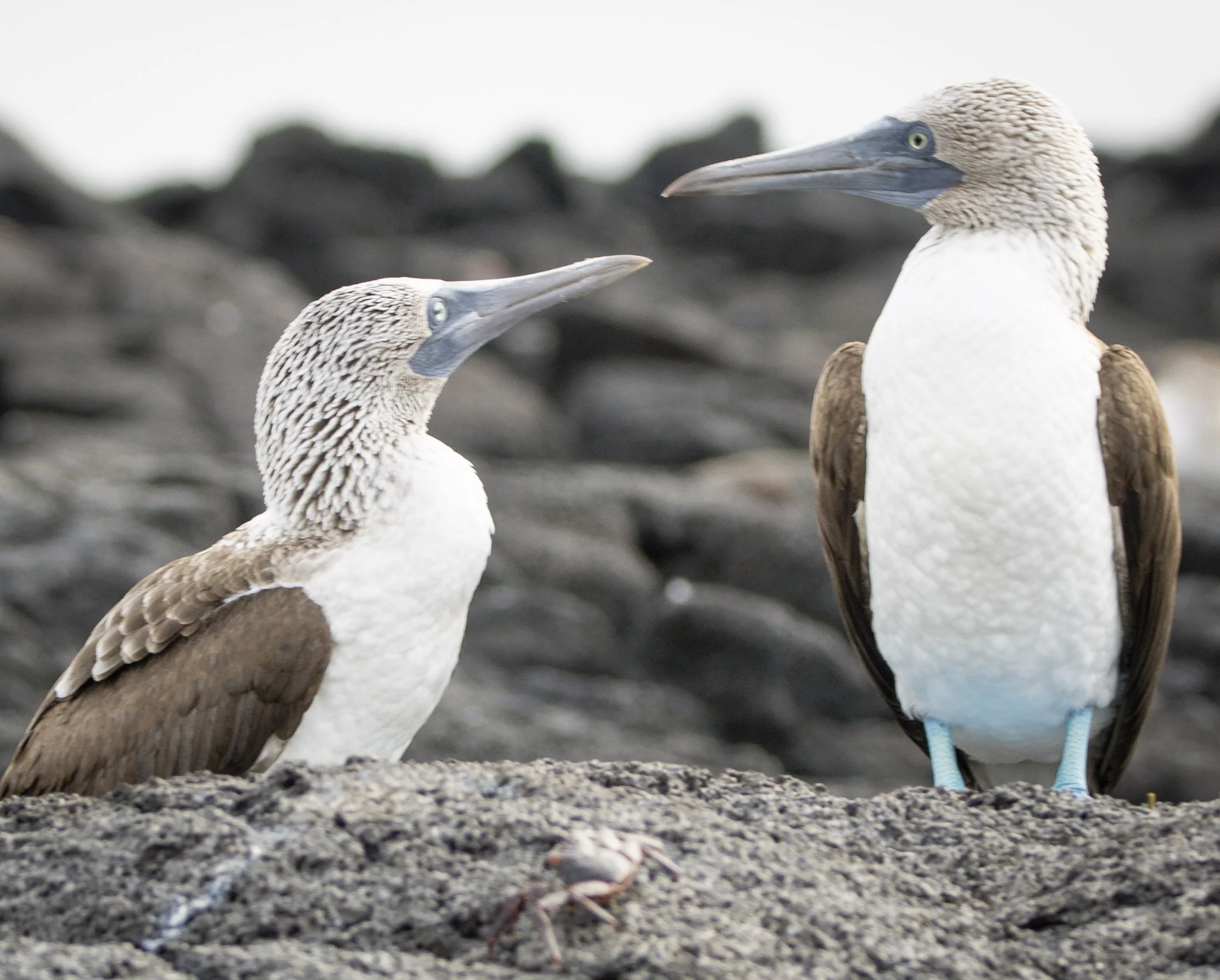
Bright blue feet: The males’ feet are typically a more intense cobalt blue than the females’, used to attract mates. The color comes from carotenoid pigments obtained through their diet.
Distinctive plumage: White underparts, brownish wings and back, and a long, pointed beak built for fishing.
Size and posture: Medium-sized seabirds with a hunched, purposeful stance and a comical, deliberate walk.
Where and when to see them
Islands: Common on several Galápagos islands, especially Española, North Seymour, and San Cristóbal.
Best time: Breeding season offers the most memorable displays and is roughly from June to December, though boobies are present year-round.
Habitats: Prefer coastal cliffs, rocky shores, and arid lowlands where they nest on the ground.
Behavior and natural history
Extraordinary courtship: The males perform an elaborate dance — high-stepping to show off their blue feet, sky-pointing (tilting head upward while pointing the beak), and presenting small twigs or pebbles. Females respond with their own displays before pair bonding.
Diving feeders: They’re expert plunge-divers, spotting fish from the air and folding their wings back to dive at high speed into the sea.
Parenting: Both parents share incubation and chick-rearing duties. Nests are simple scrapes in the ground; eggs and chicks are vulnerable to heat, predation, and introduced species.
Social life: Often seen in pairs or small colonies. They’re relatively tolerant of people if approached respectfully.
Conservation notes
IUCN status: Currently listed as Least Concern, but populations face local pressures.
Threats: Introduced predators (rats, cats), human disturbance, habitat degradation, and overfishing impacting their prey. Climate events like El Niño can dramatically reduce food availability and breeding success.
Protection: The Galápagos National Park provides strong protections, and visitor rules help minimize disturbance. Responsible tourism and biosecurity measures are crucial.
Photography tips
Timing: Early morning and late afternoon light yields the best color and softer shadows.
Composition: Capture the blue feet in courtship displays or close-ups of the head and beak. Environmental shots with cliffs or ocean add context.
Behavior shots: Wait for the sky-pointing and foot-lift displays; a fast shutter speed will freeze diving action.
Respectful distance: Use a telephoto lens rather than approaching too closely; maintain the island rules to protect nesting birds.
Why they matter Blue-footed boobies are a charismatic emblem of Galápagos wildlife — visually striking, behaviorally fascinating, and ecologically important as indicators of marine health. Seeing them connect you to the islands’ evolutionary wonder and the ongoing need to protect these unique ecosystems.
Blue-footed boobies in the Galápagos are unforgettable — a perfect blend of vivid color, curious behavior, and island charisma. If you’re planning a visit or simply want to know what makes these seabirds so special, here’s everything to appreciate about them.
What they look like
Bright blue feet: The males’ feet are typically a more intense cobalt blue than the females’, used to attract mates. The color comes from carotenoid pigments obtained through their diet.
Distinctive plumage: White underparts, brownish wings and back, and a long, pointed beak built for fishing.
Size and posture: Medium-sized seabirds with a hunched, purposeful stance and a comical, deliberate walk.
Where and when to see them
Islands: Common on several Galápagos islands, especially Española, North Seymour, and San Cristóbal.
Best time: Breeding season offers the most memorable displays and is roughly from June to December, though boobies are present year-round.
Habitats: Prefer coastal cliffs, rocky shores, and arid lowlands where they nest on the ground.
Behavior and natural history
Extraordinary courtship: The males perform an elaborate dance — high-stepping to show off their blue feet, sky-pointing (tilting head upward while pointing the beak), and presenting small twigs or pebbles. Females respond with their own displays before pair bonding.
Diving feeders: They’re expert plunge-divers, spotting fish from the air and folding their wings back to dive at high speed into the sea.
Parenting: Both parents share incubation and chick-rearing duties. Nests are simple scrapes in the ground; eggs and chicks are vulnerable to heat, predation, and introduced species.
Social life: Often seen in pairs or small colonies. They’re relatively tolerant of people if approached respectfully.
Conservation notes
IUCN status: Currently listed as Least Concern, but populations face local pressures.
Threats: Introduced predators (rats, cats), human disturbance, habitat degradation, and overfishing impacting their prey. Climate events like El Niño can dramatically reduce food availability and breeding success.
Protection: The Galápagos National Park provides strong protections, and visitor rules help minimize disturbance. Responsible tourism and biosecurity measures are crucial.
Photography tips
Timing: Early morning and late afternoon light yields the best color and softer shadows.
Composition: Capture the blue feet in courtship displays or close-ups of the head and beak. Environmental shots with cliffs or ocean add context.
Behavior shots: Wait for the sky-pointing and foot-lift displays; a fast shutter speed will freeze diving action.
Respectful distance: Use a telephoto lens rather than approaching too closely; maintain the island rules to protect nesting birds.
Why they matter Blue-footed boobies are a charismatic emblem of Galápagos wildlife — visually striking, behaviorally fascinating, and ecologically important as indicators of marine health. Seeing them connect you to the islands’ evolutionary wonder and the ongoing need to protect these unique ecosystems.