 Image 1 of 1
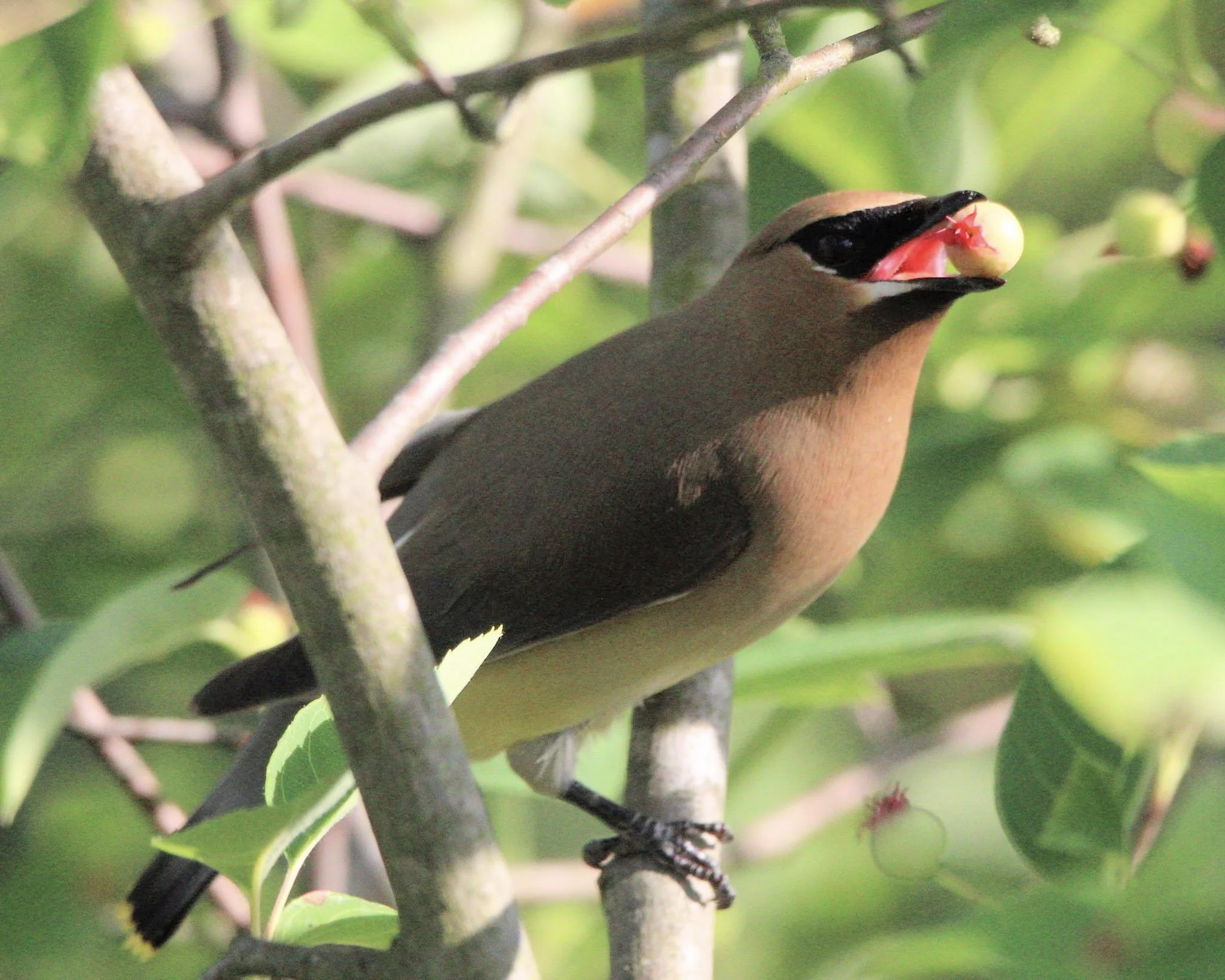
Cedar Waxwing with Serviceberry
A sleek, silky Cedar Waxwing perches delicately among the pale blossoms and ripening berries of a serviceberry shrub. Its soft brown crest and subtle face mask contrast with the creamy throat and pale yellow belly, while the tiny red waxy tips on its secondary wing feathers catch the light like punctuation marks. The serviceberry’s clustered white flowers (or later, round purple fruits) provide both a fragrant backdrop and a valuable food source — a perfect pairing of bird and berry in late spring.
Tips for seeing and photographing this scene:
Look for flocks of waxwings in suburban yards, edge habitats, and parks where serviceberries or similar fruiting shrubs grow.
Approach slowly and use a telephoto lens; waxwings are sociable but skittish.
Shoot during the golden hours (early morning or late afternoon) for soft, warm light that enhances the bird’s subtle colors.
Capture interaction: a bird plucking a berry, a bill-stained chin, or a group feeding together tells a richer story than a static pose.
Keep compositions simple: a shallow depth of field isolates the bird and berry, while including a bit of branch or blossom gives context.
Why it matters: Serviceberries are a native plant that supports spring pollinators and provides high-energy fruit for migratory and resident birds like Cedar Waxwings. Planting them encourages wildlife and creates beautiful, photogenic moments in your own yard.
Cedar Waxwing with Serviceberry
A sleek, silky Cedar Waxwing perches delicately among the pale blossoms and ripening berries of a serviceberry shrub. Its soft brown crest and subtle face mask contrast with the creamy throat and pale yellow belly, while the tiny red waxy tips on its secondary wing feathers catch the light like punctuation marks. The serviceberry’s clustered white flowers (or later, round purple fruits) provide both a fragrant backdrop and a valuable food source — a perfect pairing of bird and berry in late spring.
Tips for seeing and photographing this scene:
Look for flocks of waxwings in suburban yards, edge habitats, and parks where serviceberries or similar fruiting shrubs grow.
Approach slowly and use a telephoto lens; waxwings are sociable but skittish.
Shoot during the golden hours (early morning or late afternoon) for soft, warm light that enhances the bird’s subtle colors.
Capture interaction: a bird plucking a berry, a bill-stained chin, or a group feeding together tells a richer story than a static pose.
Keep compositions simple: a shallow depth of field isolates the bird and berry, while including a bit of branch or blossom gives context.
Why it matters: Serviceberries are a native plant that supports spring pollinators and provides high-energy fruit for migratory and resident birds like Cedar Waxwings. Planting them encourages wildlife and creates beautiful, photogenic moments in your own yard.