 Image 1 of 1
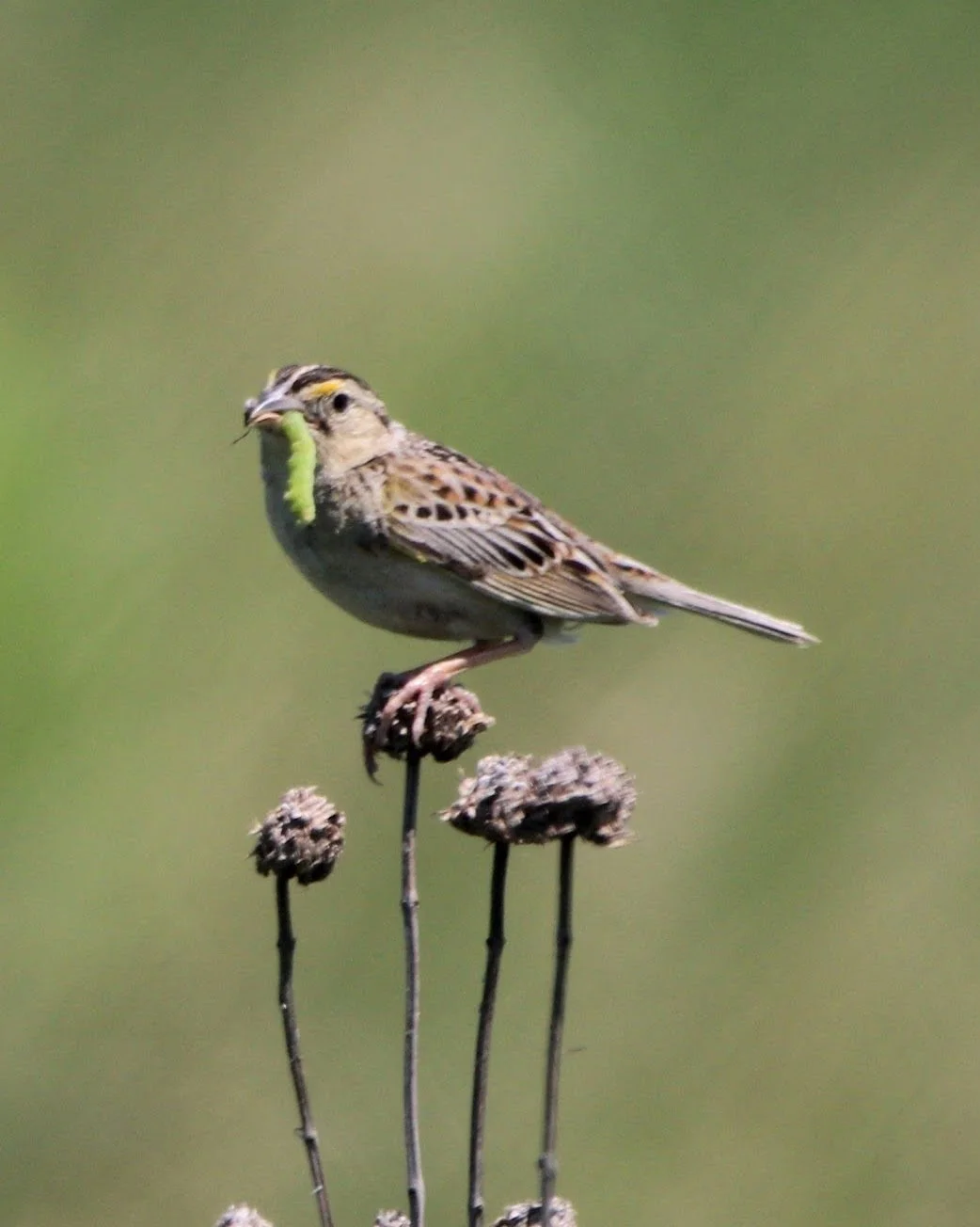
Grasshopper Sparrow, perched atop the dry seed heads in a Nebraska field, holds a bright green worm in its beak — a surprising splash of color against the muted golds and tans of late summer prairie. The sparrow’s compact body and streaked back blend with the stalks, but its softly rounded head and pale eye-ring give it a quietly confident look as it balances on the thin stems. The seed heads bow slightly underfoot, whispering with each small movement, while the bird’s short tail flicks once before it turns its head to swallow the prize.
This moment captures the everyday drama of grassland life: a tiny hunter mastering the vertical world of seed stalks, where the line between concealment and exposure is measured in inches. The worm—vivid, almost neon against the field’s earthy palette—speaks to the sparrow’s adaptability and the abundance of insect life that makes these habitats vital. Around the bird, the prairie hums softly with distant insect choruses and the occasional rustle of grasses; up close, the scene is intimate and focused, the sparrow’s intent expression revealing the single-mindedness of a parent provisioning or a bird securing a meal.
Photographing this requires a low, patient approach to avoid startling the bird, a telephoto lens to frame the delicate balance on the seed heads, and a light that flatters the warm, textured tones of the grass. Timing matters: early morning or late afternoon light will emphasize the sparrow’s subtle plumage—those soft streaks and warm buff underparts—while casting gentle shadows that give depth to the scene. The result is a portrait that’s both small in scale and big in story: survival, seasonality, and the quiet resilience of prairie life embodied in a single, green-beaked moment.
Grasshopper Sparrow, perched atop the dry seed heads in a Nebraska field, holds a bright green worm in its beak — a surprising splash of color against the muted golds and tans of late summer prairie. The sparrow’s compact body and streaked back blend with the stalks, but its softly rounded head and pale eye-ring give it a quietly confident look as it balances on the thin stems. The seed heads bow slightly underfoot, whispering with each small movement, while the bird’s short tail flicks once before it turns its head to swallow the prize.
This moment captures the everyday drama of grassland life: a tiny hunter mastering the vertical world of seed stalks, where the line between concealment and exposure is measured in inches. The worm—vivid, almost neon against the field’s earthy palette—speaks to the sparrow’s adaptability and the abundance of insect life that makes these habitats vital. Around the bird, the prairie hums softly with distant insect choruses and the occasional rustle of grasses; up close, the scene is intimate and focused, the sparrow’s intent expression revealing the single-mindedness of a parent provisioning or a bird securing a meal.
Photographing this requires a low, patient approach to avoid startling the bird, a telephoto lens to frame the delicate balance on the seed heads, and a light that flatters the warm, textured tones of the grass. Timing matters: early morning or late afternoon light will emphasize the sparrow’s subtle plumage—those soft streaks and warm buff underparts—while casting gentle shadows that give depth to the scene. The result is a portrait that’s both small in scale and big in story: survival, seasonality, and the quiet resilience of prairie life embodied in a single, green-beaked moment.