 Image 1 of 1
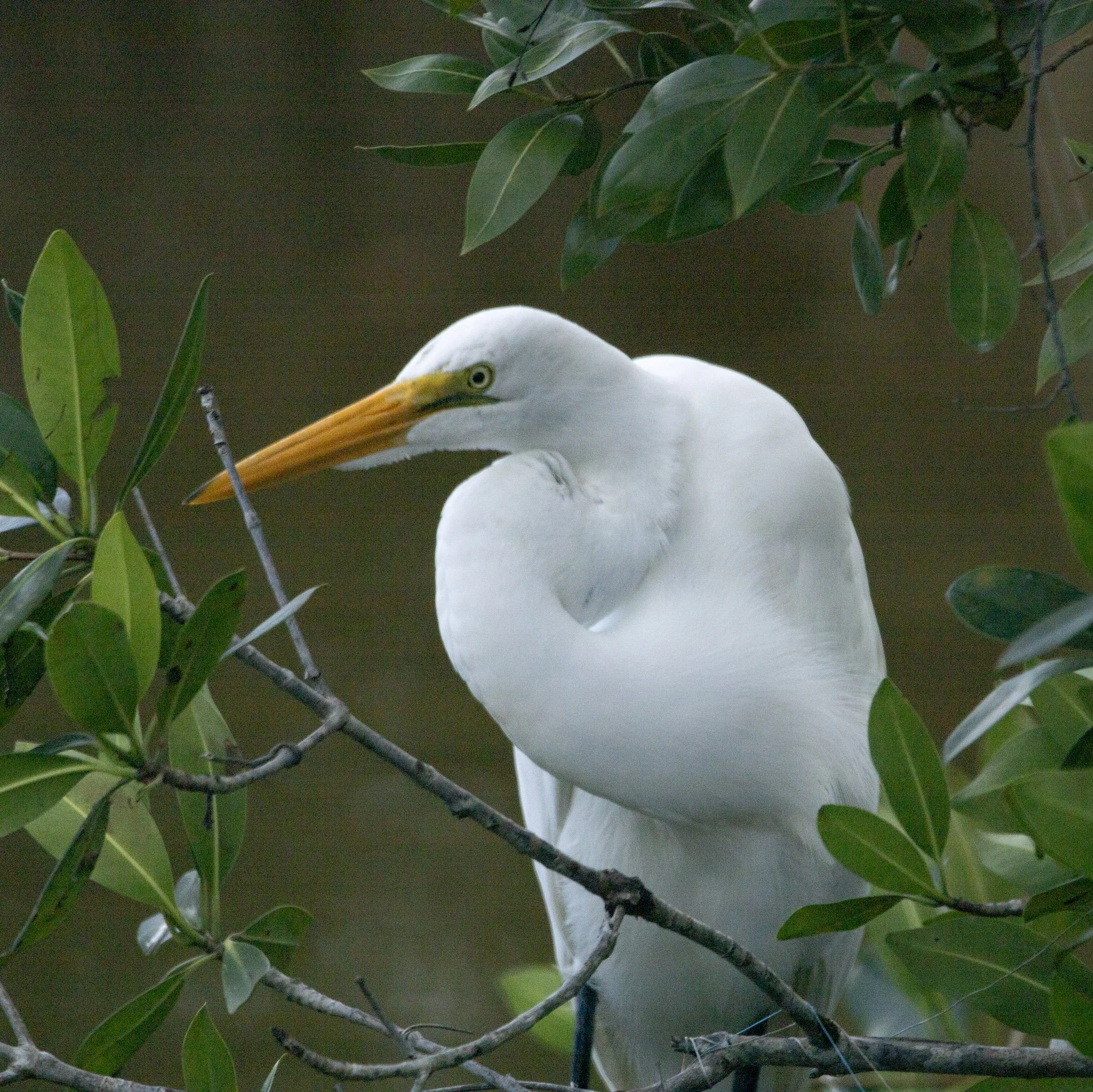
Great Egret in Mangrove Greenery — Everglades, Florida
A lone Great Egret stands like a sculpture among the tangled roots and lush leaves of mangrove shoreline, its pristine white plumage glowing against the deep mangrove green. Long, graceful neck curved in a soft S, the bird pauses mid-hunt, eyes intent and beak poised to strike. Sunlight filters through the canopy, creating dappled highlights across the egret’s feathers and casting mirrored patches on the still water below.
Composition notes:
Low-angle perspective emphasizes the egret’s elegance and places the viewer at eye level with the bird.
Include surrounding mangrove root structures to frame the subject and convey habitat context.
Use negative space of open water or sky to accentuate the egret’s clean silhouette.
Lighting and exposure:
Soft, early-morning or late-afternoon light enhances feather texture without harsh shadows.
Slight underexposure by 1/3 to 1 stop preserves highlight detail in the white plumage; raise shadows in post if needed.
Fast shutter (1/1000s or faster) freezes subtle movements during hunting; pair with a telephoto lens (400mm+) for tight framing.
Behavioral cues:
Look for moments of stalk, freeze, or the snap of the bill — those decisive instants convey purpose and drama.
Watch for reflections and prey disturbances in the water as triggers for action shots.
Post-processing tips:
Retain natural greens of the mangroves; avoid oversaturating to keep a realistic Everglades feel.
Use localized contrast and clarity on the egret to separate it from the background while maintaining soft, organic surroundings.
Subtle noise reduction and sharpening focused on the eye and bill improves impact without over-processing feathers.
Mood and storytelling:
This scene captures the quiet patience and precision of a coastal predator in its native wetland home. Emphasize solitude and the delicate balance of predator and habitat to tell the Everglades’ story through a single, elegant subject.
Great Egret in Mangrove Greenery — Everglades, Florida
A lone Great Egret stands like a sculpture among the tangled roots and lush leaves of mangrove shoreline, its pristine white plumage glowing against the deep mangrove green. Long, graceful neck curved in a soft S, the bird pauses mid-hunt, eyes intent and beak poised to strike. Sunlight filters through the canopy, creating dappled highlights across the egret’s feathers and casting mirrored patches on the still water below.
Composition notes:
Low-angle perspective emphasizes the egret’s elegance and places the viewer at eye level with the bird.
Include surrounding mangrove root structures to frame the subject and convey habitat context.
Use negative space of open water or sky to accentuate the egret’s clean silhouette.
Lighting and exposure:
Soft, early-morning or late-afternoon light enhances feather texture without harsh shadows.
Slight underexposure by 1/3 to 1 stop preserves highlight detail in the white plumage; raise shadows in post if needed.
Fast shutter (1/1000s or faster) freezes subtle movements during hunting; pair with a telephoto lens (400mm+) for tight framing.
Behavioral cues:
Look for moments of stalk, freeze, or the snap of the bill — those decisive instants convey purpose and drama.
Watch for reflections and prey disturbances in the water as triggers for action shots.
Post-processing tips:
Retain natural greens of the mangroves; avoid oversaturating to keep a realistic Everglades feel.
Use localized contrast and clarity on the egret to separate it from the background while maintaining soft, organic surroundings.
Subtle noise reduction and sharpening focused on the eye and bill improves impact without over-processing feathers.
Mood and storytelling:
This scene captures the quiet patience and precision of a coastal predator in its native wetland home. Emphasize solitude and the delicate balance of predator and habitat to tell the Everglades’ story through a single, elegant subject.