 Image 1 of 1
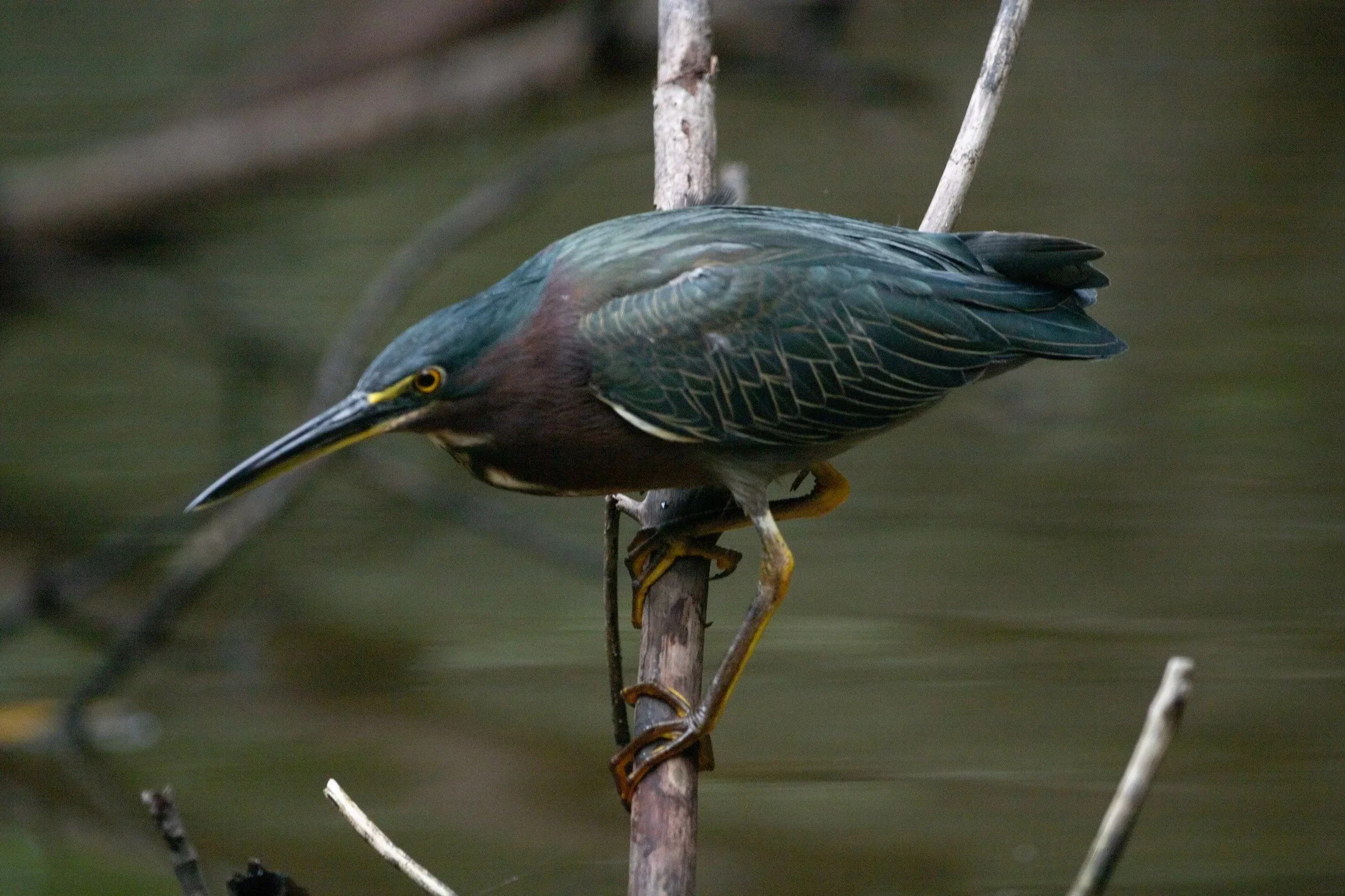
Green Heron In Big Cypress Nature Preserve Florida
Green Heron — Big Cypress Nature Preserve, Florida
A compact, quietly confident hunter, the Green Heron (Butorides virescens) blends into the swampy tapestry of Big Cypress Nature Preserve with surprising stealth. At roughly the size of a crow but built for stalking, it often perches motionless on cypress knees, fallen logs, or low branches over dark water, waiting for the precise moment to strike.
Identification
Size: 16–18 inches (including neck), stocky body.
Plumage: Rich chestnut neck and chest, deep greenish-black cap, and iridescent greenish-black back that gives the species its common name. Wings show a brownish pattern when folded.
Legs and bill: Relatively short yellow-green legs; bill is long, straight, and sharp — perfect for spearing fish and crustaceans.
Juveniles: Streaked brown and buff, more rufous overall than adults.
Behavior and Feeding
Foraging style: Patient ambush predator. Often stands perfectly still, then lunges at small fish, frogs, insects, and crustaceans. They’re famous for occasional tool use — dropping bait (insects, feathers, or bread) to lure fish within striking distance.
Movement: Short, deliberate steps; when disturbed they prefer to freeze or glide away low over the water, unlike the taller, more ostentatious great blue heron.
Habitat in Big Cypress
Big Cypress offers the seasonally flooded cypress swamps, sloughs, and mangrove edges these herons favor. Slightly elevated perches, shallow edges, and tannin-stained water provide ideal hunting grounds.
Look for them along boardwalks, canal edges, and quiet backwaters where water is clear enough for prey to be visible but shaded enough for the heron to remain concealed.
Best Times to See One
Early morning and late afternoon are prime — when prey is active and light creates the contrast that reveals the heron’s silhouette.
During the dry season, when water levels concentrate fish and amphibians, feeding activity can be particularly intense.
Photographing Tips
Approach slowly and keep a low profile; Green Herons tolerate closer vantage points than larger herons but will bolt if you make sudden moves.
Use a telephoto lens (300mm or longer recommended) to capture close-up behavior without disturbance.
Aim for images that show the iridescent back or the rich chestnut neck; low-angle shots over water yield flattering reflections and a natural context.
Fast shutter speeds (1/1000s or faster) help freeze sudden lunges; continuous focus (AI-Servo/AF-C) tracks motion.
Conservation Notes
Currently widespread and considered of least concern, Green Herons nonetheless depend on healthy wetland ecosystems. Preservation of water quality, hydrology, and native vegetation in places like Big Cypress is essential to sustain their habitat and prey base.
Encounter impression
Seeing a Green Heron in Big Cypress is a reminder that the swamp’s smaller, quieter residents are as fascinating as their larger cousins. Their vivid colors and cunning hunting techniques reward patience — a brief, jewel-like moment amid the cypress and shadows.
Green Heron — Big Cypress Nature Preserve, Florida
A compact, quietly confident hunter, the Green Heron (Butorides virescens) blends into the swampy tapestry of Big Cypress Nature Preserve with surprising stealth. At roughly the size of a crow but built for stalking, it often perches motionless on cypress knees, fallen logs, or low branches over dark water, waiting for the precise moment to strike.
Identification
Size: 16–18 inches (including neck), stocky body.
Plumage: Rich chestnut neck and chest, deep greenish-black cap, and iridescent greenish-black back that gives the species its common name. Wings show a brownish pattern when folded.
Legs and bill: Relatively short yellow-green legs; bill is long, straight, and sharp — perfect for spearing fish and crustaceans.
Juveniles: Streaked brown and buff, more rufous overall than adults.
Behavior and Feeding
Foraging style: Patient ambush predator. Often stands perfectly still, then lunges at small fish, frogs, insects, and crustaceans. They’re famous for occasional tool use — dropping bait (insects, feathers, or bread) to lure fish within striking distance.
Movement: Short, deliberate steps; when disturbed they prefer to freeze or glide away low over the water, unlike the taller, more ostentatious great blue heron.
Habitat in Big Cypress
Big Cypress offers the seasonally flooded cypress swamps, sloughs, and mangrove edges these herons favor. Slightly elevated perches, shallow edges, and tannin-stained water provide ideal hunting grounds.
Look for them along boardwalks, canal edges, and quiet backwaters where water is clear enough for prey to be visible but shaded enough for the heron to remain concealed.
Best Times to See One
Early morning and late afternoon are prime — when prey is active and light creates the contrast that reveals the heron’s silhouette.
During the dry season, when water levels concentrate fish and amphibians, feeding activity can be particularly intense.
Photographing Tips
Approach slowly and keep a low profile; Green Herons tolerate closer vantage points than larger herons but will bolt if you make sudden moves.
Use a telephoto lens (300mm or longer recommended) to capture close-up behavior without disturbance.
Aim for images that show the iridescent back or the rich chestnut neck; low-angle shots over water yield flattering reflections and a natural context.
Fast shutter speeds (1/1000s or faster) help freeze sudden lunges; continuous focus (AI-Servo/AF-C) tracks motion.
Conservation Notes
Currently widespread and considered of least concern, Green Herons nonetheless depend on healthy wetland ecosystems. Preservation of water quality, hydrology, and native vegetation in places like Big Cypress is essential to sustain their habitat and prey base.
Encounter impression
Seeing a Green Heron in Big Cypress is a reminder that the swamp’s smaller, quieter residents are as fascinating as their larger cousins. Their vivid colors and cunning hunting techniques reward patience — a brief, jewel-like moment amid the cypress and shadows.