 Image 1 of 1
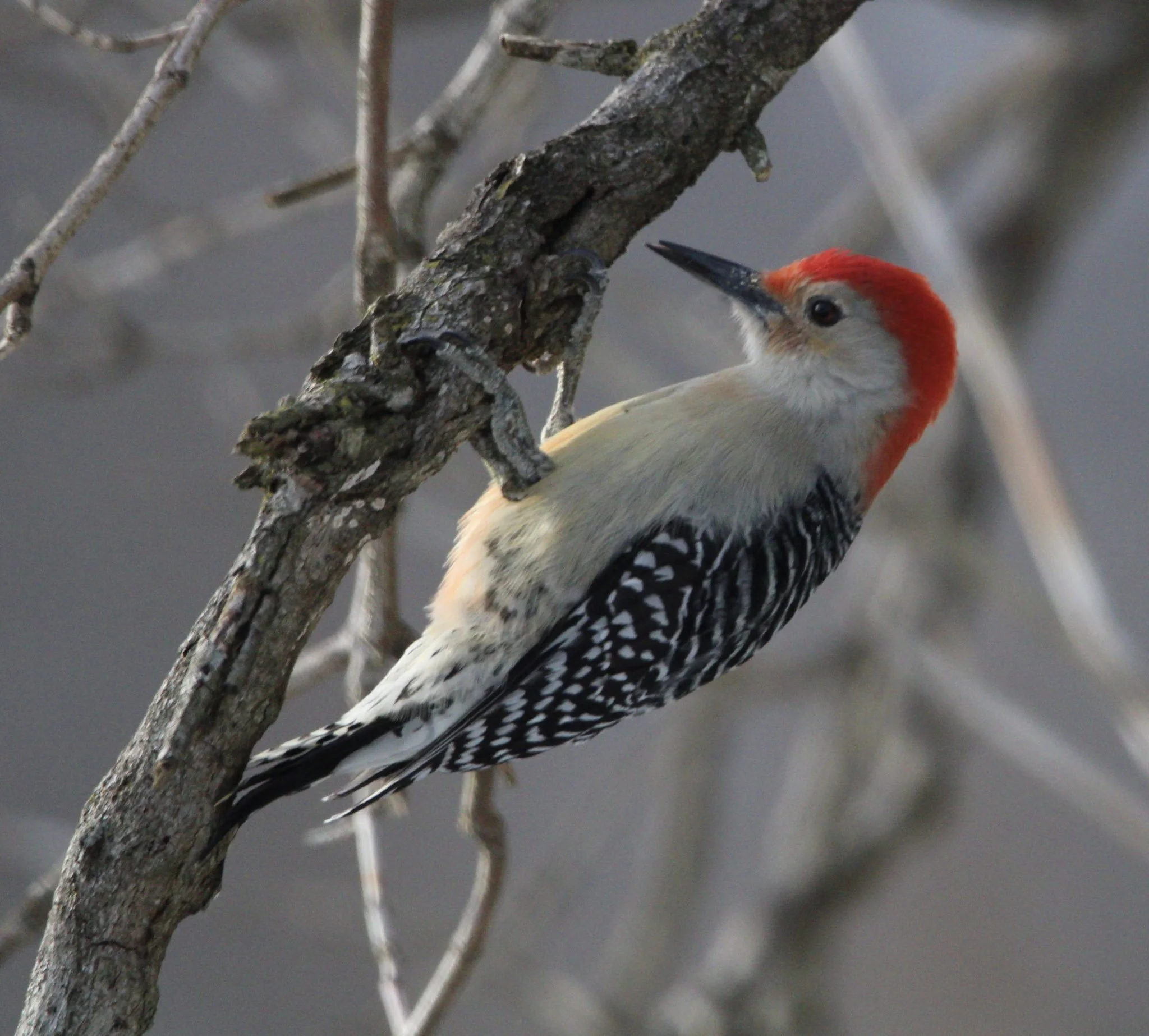
Red-bellied Woodpecker
Identification
Size: Medium (9–10 in)
Distinctive markings: Bold black-and-white barred back and wings; pale face and underparts; bright red cap (males: red from bill to nape; females: red on nape only)
Name note: Despite the name, the red on the belly is often faint and hard to see.
Behavior & Voice
Active, acrobatic forager often seen clinging to tree trunks and branches, sometimes feeding on suet feeders and peanut feeders in yards.
Diet: Insects, seeds, nuts, berries, and occasional fruit. Will cache food in tree crevices.
Call: A clear, rolling "churr" or "chick-a" series; also a short, sharp "kwirr" and rapid drumming.
Habitat & Range
Common across eastern United States in woodlands, suburban areas, parks, and backyard feeders.
Prefers deciduous forests and mixed woodlands but adapts well to orchards and neighborhoods with large trees.
Breeding & Nesting
Nest: Excavates cavity in dead or live trees, often 3–40 feet above ground.
Eggs: Typically 3–6 white eggs.
Both parents share incubation and feeding of chicks.
Territorial during breeding season; will chase other birds from nest area.
Tips for Photographing
Look for movement along trunks and branches; they'll often pause and peer before moving.
Use a moderate telephoto (300–600mm) for clean head-and-body shots; include some habitat for context.
Feeders with suet or peanuts attract them—position your blind or hide to hide motion and backlight for good catchlight in the eye.
Early morning and late afternoon provide softer light and more active behavior.
Fun Facts
They are excellent at clinging to smooth surfaces and can forage upside down.
Despite their striking head coloring, the belly streaking is usually pale — the species name
Red-bellied Woodpecker
Identification
Size: Medium (9–10 in)
Distinctive markings: Bold black-and-white barred back and wings; pale face and underparts; bright red cap (males: red from bill to nape; females: red on nape only)
Name note: Despite the name, the red on the belly is often faint and hard to see.
Behavior & Voice
Active, acrobatic forager often seen clinging to tree trunks and branches, sometimes feeding on suet feeders and peanut feeders in yards.
Diet: Insects, seeds, nuts, berries, and occasional fruit. Will cache food in tree crevices.
Call: A clear, rolling "churr" or "chick-a" series; also a short, sharp "kwirr" and rapid drumming.
Habitat & Range
Common across eastern United States in woodlands, suburban areas, parks, and backyard feeders.
Prefers deciduous forests and mixed woodlands but adapts well to orchards and neighborhoods with large trees.
Breeding & Nesting
Nest: Excavates cavity in dead or live trees, often 3–40 feet above ground.
Eggs: Typically 3–6 white eggs.
Both parents share incubation and feeding of chicks.
Territorial during breeding season; will chase other birds from nest area.
Tips for Photographing
Look for movement along trunks and branches; they'll often pause and peer before moving.
Use a moderate telephoto (300–600mm) for clean head-and-body shots; include some habitat for context.
Feeders with suet or peanuts attract them—position your blind or hide to hide motion and backlight for good catchlight in the eye.
Early morning and late afternoon provide softer light and more active behavior.
Fun Facts
They are excellent at clinging to smooth surfaces and can forage upside down.
Despite their striking head coloring, the belly streaking is usually pale — the species name